
Wondering why Warren whacked Apple?
- Posted in:
- economy
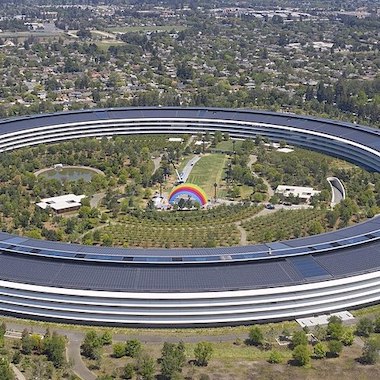
Apple Park in Cupertino
Berkshire halves Apple stake, boosts cash to $277 billion as it gets 'defensive’
Aug 3 (Reuters) – Warren Buffett appears to have soured on stocks, letting cash at Berkshire Hathaway soar to nearly $277 billion and selling about half its stake in Apple (AAPL.O), even as the conglomerate posted a record quarterly operating profit.
Berkshire's results released on Saturday suggest the 93-year-old Buffett, one of the world's most revered investors, is growing wary about the broader U.S. economy, or stock market valuations that have gotten too high.
The results followed a stock market selloff that pushed the Nasdaq into correction territory, and a weak jobs report that sparked worries about U.S. economic activity and whether the Federal Reserve waited too long to cut interest rates…

…Berkshire also repurchased just $345 million of its own stock, down from $2.57 billion in the first quarter, and none in the first three weeks of July. Read more.
Why do companies buy back their own stock?
AI answer:
Based on the provided search results, companies buy back their own stock for several reasons:
- Return profits to shareholders: By reducing the number of outstanding shares, companies increase the value of the remaining shares, benefiting shareholders. This is achieved by returning profits to investors, either through cash distributions or increased share value.
- Consolidate ownership: Companies may repurchase shares to consolidate ownership, potentially reducing the influence of large institutional investors or activist shareholders.
- Preserve stock prices: By reducing the supply of shares, companies can help maintain or increase stock prices, which can be beneficial for investors and the company’s overall valuation.
- Return stock prices to real value: If a company’s shares are overvalued, buying back shares can help correct the market price, making it more reflective of the company’s true worth.
- Boost financial ratios: Share repurchases can improve financial ratios, such as earnings per share (EPS) and return on equity (ROE), by reducing the number of outstanding shares.
- Reduce the cost of capital: By reducing the number of shares, companies can lower their debt-to-equity ratio, making it cheaper to access capital markets.
It’s essential to note that not all share buybacks are created equal. Companies must carefully consider the timing and purpose of their repurchases to ensure they align with their overall business strategy and create long-term value for shareholders.