SEP 9 2026KENTUCKY
U.S. Smokeless Tobacco Co. expanding in Hopkinsville
U.S. Smokeless Tobacco Co. has broken ground on a $250 million manufacturing expansion in Hopkinsville that is expected to create more than 200 jobs and approximately double the company’s Kentucky workforce. The company received a $12 million tax incentive package from the Kentucky Economic Development Finance Authority (KEDFA) to support the new manufacturing facility.
Read more in Hopkinsville's newspaper and The Lane Report.
A summary of key details includes:
- State Incentives: A 15-year performance-based agreement providing up to $12 million in tax incentives based on predicted job creation and associated wages.
- Job Requirements: The project is expected to create 200 new jobs in Christian County, effectively doubling USSTC’s Kentucky workforce.
- Local Contributions: The City of Hopkinsville and Christian County contributed an additional incentive package of $1.4 million to secure the project.
- Consolidation: The new Hopkinsville facility replaces a 30-acre plant in Nashville, Tennessee, which is scheduled to close in 2028.
Are taxpayers affected when tax incentives are provided to new ventures? Brave AI answer:
Taxpayers are affected through reduced public service funding, higher tax burdens on existing businesses, and increased costs for public infrastructure. State and local governments provide an estimated $50 billion to $95 billion annually in tax incentives. Because these programs are rarely self-financing, the resulting revenue loss must be offset by raising other taxes or cutting essential public services such as education, infrastructure maintenance, and public safety.
As taxpayers, we fund many projects that are harmful to the health of our fellow Americans.
Smokeless tobacco carries serious health risks, despite the common misconception that it's a "safe" alternative to smoking. Here's a summary:
- Cancer - Causes oral (mouth), esophageal, and pancreatic cancer (CDC, NCI)
- Oral & Dental Damage -Leukoplakia (precancerous white patches in the mouth), gum disease, receding gums, tooth decay, tooth loss, and jawbone deterioration
- Cardiovascular - Elevated risk of heart disease, heart attack, and stroke
- Other - nicotine addiction, increased risk of stillbirth if pregnant, more
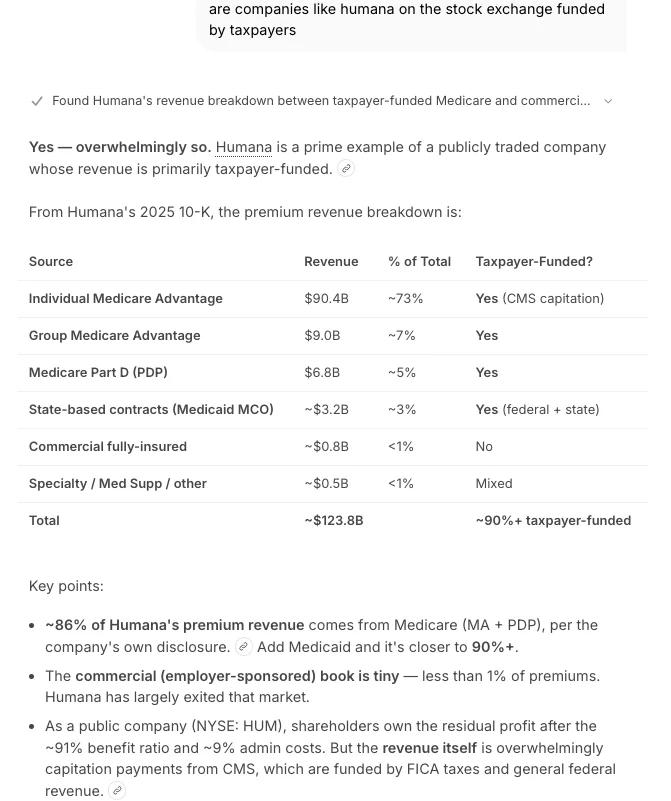
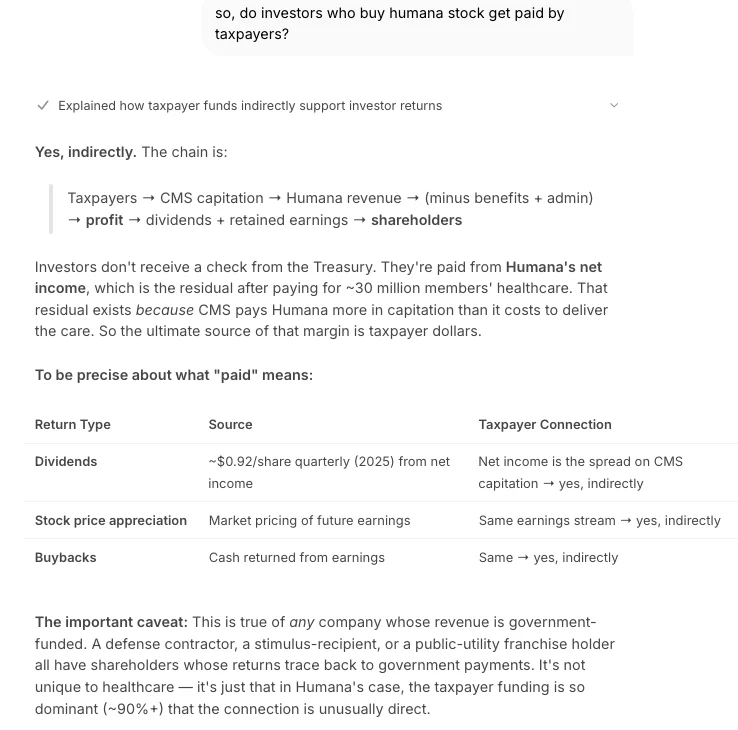
And taxpayers help provide healthcare for people who become ill from results of tobacco use. The below screenshots shows Brave AI’s answers to the questions: Are companies like Humana on the stock exchange funded by taxpayers? So, do investors who buy Humana stock get paid by taxpayers? Humana is one of many examples of healhtcare insurance providers. These things are difficult to parse. What is entrepreneurial risk-taking in the 21st century?